


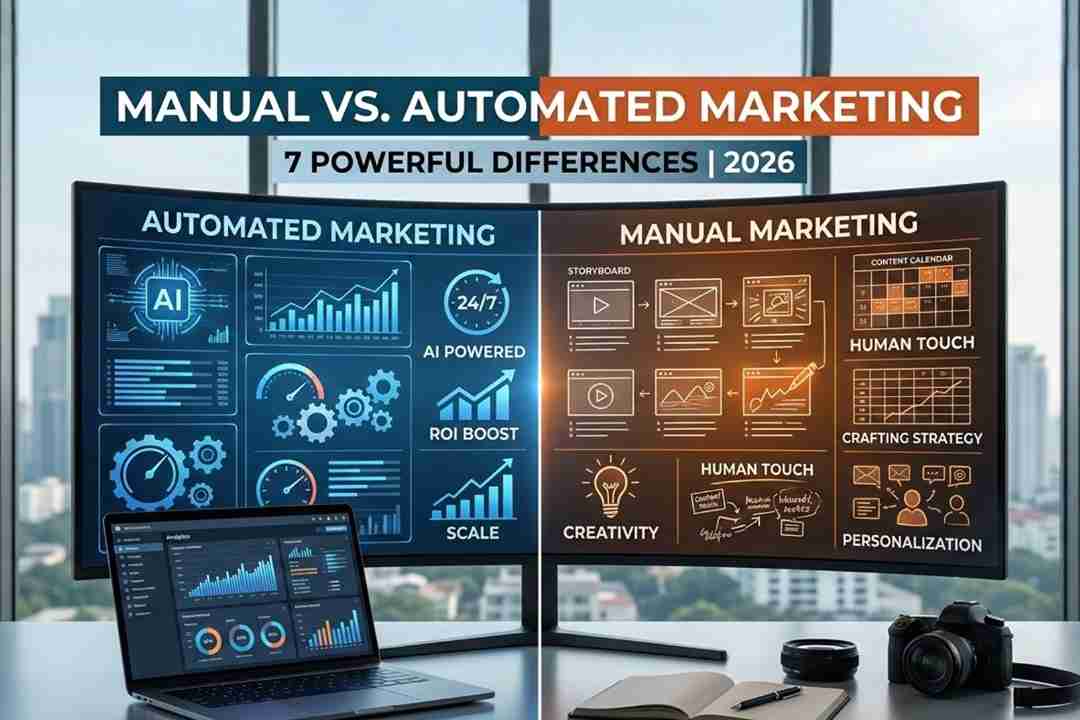
Digital Marketing Agency in Bangalore: Manual Marketing vs Automated Marketing 7 Powerful Differences That Will Define Success in 2026
Introduction
In today’s fast-paced digital world, businesses are under pressure to generate leads, follow up instantly, and convert prospects efficiently. Yet many companies still rely heavily on manual marketing processes that slow growth and increase costs.
As we move into 2026, the difference between manual and automated marketing has become a critical decision point for businesses that want to scale sustainably.
At SKYUP Digital, we often see businesses struggle not because of lack of leads—but because they lack the right marketing systems. This blog explains the difference between manual marketing and automated marketing, helping you choose the right approach for long-term success.
What Is Manual Marketing?
Manual marketing refers to marketing activities performed by humans without automation tools. Every task—from lead follow-ups to campaign execution—requires direct effort.
In manual marketing, leads are tracked in spreadsheets, follow-ups are done via calls or messages, campaigns require constant supervision, and reporting is time-consuming.
While manual marketing can work for very small teams, it becomes inefficient as lead volume increases.
What Is Automated Marketing?
Automated marketing (marketing automation) uses technology to handle repetitive tasks automatically, including lead capture, follow-ups, segmentation, nurturing, and reporting.
With automation, leads can be captured instantly into a CRM, follow-ups can happen automatically through email or WhatsApp, campaigns can run 24/7, and performance reporting can be generated in real time.
Automated marketing allows businesses to scale without increasing manpower.
Difference Between Manual and Automated Marketing
The core difference lies in efficiency, scalability, and consistency. Manual marketing depends heavily on human effort, which increases the risk of missed leads, delayed responses, and inconsistent communication.
Automated marketing ensures every lead receives timely, structured, and personalized engagement. Businesses using automation often respond to leads much faster, which directly improves conversion rates.
Key Advantages of Manual Marketing
Manual marketing still has a place, especially in early business stages. It allows personal human interaction, flexible decision-making, and low initial technology cost.
However, it becomes difficult to manage when lead volume grows or multiple campaigns run simultaneously.
Key Advantages of Automated Marketing
Automated marketing offers clear benefits: instant lead response improves trust, consistent follow-ups increase conversions, better segmentation improves lead quality, and dependency on manual effort reduces.
Automation also improves ROI from ads and SEO because fewer leads are wasted due to delays or missed follow-ups.
For industries like real estate, service businesses, and local businesses, automation is no longer optional—it’s essential.
Why Manual Marketing Fails as Businesses Grow
As businesses scale, manual processes break down. Follow-ups get missed, leads get lost, and response times increase—leading to poor customer experience and low lead-to-conversion ratios.
This often increases cost per lead and causes burnout among sales teams. In 2026, speed and personalization decide who wins the customer.
How Automated Marketing Solves These Problems
Automation creates a structured lead management system. Once a lead enters your system, it receives instant acknowledgment, follow-ups are scheduled automatically, and nurturing continues until the prospect is ready.
Sales teams can focus only on high-intent prospects. This system runs continuously—even outside business hours.
Frequently Asked Questions
Automation is not expensive compared to losing leads—over time it can reduce cost per lead. Small businesses can start with basic automation like CRM + WhatsApp follow-ups. Automation does not remove human touch; it supports sales teams by handling repetitive tasks.
Manual or Automated Marketing: Which Should You Choose?
Manual marketing may work for very small operations, but for businesses planning growth in 2026, automated marketing is the smarter investment.
The most successful companies use a hybrid approach—automation for efficiency and humans for relationship building.
How Skyup Digital Helps Businesses Automate Marketing
At Skyup Digital, we design custom marketing automation systems that integrate websites, ads, CRM, and follow-up channels into one seamless process.
Our strategies help businesses capture better leads, respond faster, improve conversions, and scale without chaos.
Conclusion
The difference between manual and automated marketing is no longer just about convenience—it’s about survival and growth. As competition increases in 2026, businesses that adopt automation will outperform those relying solely on manual methods.
Looking for Digital Marketing Experts in Bangalore?
Our team can implement every strategy discussed here and help your business scale—fast and effectively.

